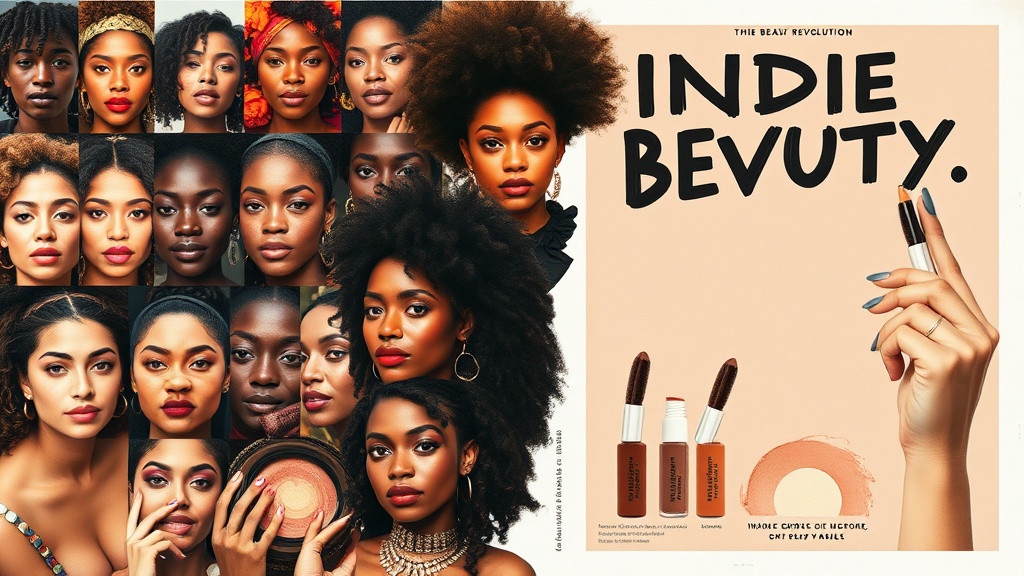
Women Didn't Wait for Permission: The Indie Beauty Takeover Nobody Talks About
Every March, beauty brands post about women. The glossy campaigns drop. The "empowerment" fonts show up. A brand that doesn't carry your foundation shade in March is telling you to "celebrate" in April. And I'm supposed to be moved?
What nobody says out loud: women stopped waiting for these brands to do it right. They didn't need inspiration. They needed a lower barrier to entry.
The Corporate Beauty Trap Is Not an Accident
I worked at Sephora for two years. I loved the products — hated almost everything else. I watched floor staff who knew more about formulation, pigmentation, and skin chemistry than the district managers who came in twice a year with slide decks. I watched customers with deep complexions get handed the wrong shades by undertrained associates because the brand hadn't bothered to formulate past NC50. And I watched the margins.
My read on what corporate beauty is actually designed to do: centralize creative control, protect IP, and extract margin at scale. That system does not care about you. It cares about the median consumer — and for decades, the median consumer they designed for was a white woman with a disposable income, because that's who they decided had disposable income.
Women of color, indie aesthetic, anything outside the commercial mainstream? That was "niche." That was "a risk." That was "we'll add two more shades next cycle."
This is why talented women left — or never showed up in the first place.
The exclusion may not have been intentional policy, but the result was consistent enough to function like one.
Why Women Built Their Own Tables
I dropped out of MICA after two years. Fine art had gatekeepers at every door — who was "real" art, who got gallery space, who had the institutional pedigree. I looked at my face and thought: this is my canvas. And Instagram was my gallery. No gatekeepers.
The founders building indie beauty brands are running the same play.
Take the Katini Skin story. An ingredient philosophy rooted in Japanese, African, and Australian botanicals — you think a corporate board greenlit that easily? Too niche, too expensive to source, too hard to mass-market. So it stayed indie. Stayed founder-controlled. Stayed better.
Luna Magic — launched by two Dominican sisters who built for the complexions and color preferences the market ignored. They didn't wait for a distribution deal to validate their vision.
Terra Moons built eyeshadow pans in colorways that didn't exist in nature because corporate beauty wouldn't touch them — too risky, too "limited audience." Their audience found them anyway.
The pattern is the same every time: corporate said "no" (explicitly or through neglect), and women built the yes themselves.
The Inclusivity Pattern (It's Not a Value. It's a Market Response.)
Here's where I'm going to say the uncomfortable thing: women-led indie beauty brands aren't more inclusive because they're morally superior. They're more inclusive because they're building for themselves and the communities they actually live in.
A Dominican-American founder building a lip collection isn't making a choice to include warm-toned shades. She's making her own lip collection. Inclusion isn't a value statement. It's the default when you're not designing for an imagined "universal" consumer who was always just one specific demographic.
This is the part that corporate empowerment campaigns get completely wrong. They frame inclusion as a gift — something big brands magnanimously chose to give. The indie reality is that women who were excluded built for the excluded and accidentally proved that the market was always there. The "niche" was always mass. Corporate just refused to see it.
The Brands That Prove It Every Day
These are the names I keep coming back to — not because they're "inspiring," but because they're delivering better products, broader shade ranges, and more honest community than anything I've found at a corporate counter.
Fenty Beauty — Yes, technically Rihanna x LVMH, but the 40-shade-at-launch in 2017 that broke corporate beauty was a founder forcing her aesthetic onto an industry that said it was too hard. The industry then proved it wasn't. Hold that.
Kulfi Beauty — Priyanka Ganjoo built this specifically for South Asian skin tones because nobody else was. The kajal and liquid eyeliner formulas are dialed for the skin types and preferences of a market that was invisible to corporate.
Ami Colé — Diarrha N'Diaye-Mbaye built for melanin-rich skin without heavy coverage or grey-cast finishes. The Skin-Enhancing Tint launched with a focused shade range, all of them correct, because a founder who IS the customer doesn't get the shade range wrong. (Note: as of 2025 Ami Colé reportedly closed — which is its own story about how hard indie is to sustain, and why redirecting beauty dollars before the brand is gone matters.)
Live Tinted — Deepica Mutyala launched because she was tired of orange concealer. The Huestick is now a cult product. Founder's frustration = product that actually works.
Beauty Bakerie — Cashmere Nicole bootstrapped this from a cancer diagnosis and a need to make something that lasted. The flour setting powder, the lip whips — cult formulas from a founder who had nothing to lose and everything to build.
Juvia's Place — Chichi Eburu founded this with Nigerian-inspired pigments for deep complexions. The Masquerade palette changed the game for anyone who thought "highly pigmented" was just marketing copy. It's not. Chichi proved it.
Buttah Skin — Dorion Renaud built this around shea butter and African black soap — the same ingredients my mom kept in her salon in Baltimore — and made them into a full modern skincare line. Nothing about this formula is an accident. It's inheritance.
EADEM — Alice Lin Glover and Marie Kouadio Amouzame built a brand specifically for "skin of color" (not as a euphemism, as an actual design target). Their formulas account for melanin reactivity. This is advanced cosmetic chemistry applied to people corporate ignored.
Bread Beauty Supply — Maeva Heim built this for natural, textured hair because the "natural hair" market was full of products that weren't actually designed for it. The ingredient decks are clean. The results are real.
Uoma Beauty — Sharon Chuter launched with 51 foundation shades and explicitly called the industry's bluff. She also started Pull Up For Change during the racial justice moment to force corporate brands to reveal internal diversity data. She's not just building product — she's doing the accountability work nobody else wanted to touch.
Pattern Beauty — Tracee Ellis Ross built this for curly, coily, and tight-textured hair because her own hair was underserved by the market she was already in. When a celebrity with resources and access still couldn't find what she needed, that tells you how deep the gap was.
4.5.6 Skin — Co-founded by Noelly Michoux, Imen Jerbi Azaiez, and Dr. Carlos Charles because dermatological research has historically excluded people with melanin-rich skin. The skincare is evidence-based for the skin type it's designed for. Not an afterthought. The thesis.
Coloured Raine — Loraine Dowdy is an indie queen. Bold colors, accessible price points, the kind of editorial eyeshadow that Terra Moons also plays in. This is the indie sector doing things corporate won't touch because the marketing department doesn't know how to pitch "midnight blue holographic liner" to a focus group.
Oui the People — Karen Young built this around body care and body autonomy before body positivity became a brand strategy for everyone else. The safety razor launched as a conscious alternative to the Pink Tax. Economics and ethics, inseparable.
Zara's Parallel (And Why I'm Not Surprised)
I didn't start my face as a canvas because it was inspiring. I started it because fine art had gatekeepers I was done arguing with.
The same week I decided I was done at MICA, I did a full editorial look on a drag performer in Baltimore for a show where the lighting was aggressive and the mirror was a phone camera propped on a shelf. We made something beautiful anyway. No gallery. No curator. No permission.
That's the indie beauty founder story, every time.
Corporate beauty didn't empower women. Women got tired of waiting and built the alternative themselves. The founders above didn't set out to be "inspiring." They set out to make the product they couldn't find, serve the customer nobody else was serving, and run a business that reflected their actual values — which happen to align with the values of the communities they came from.
The IWD campaigns will tell you these women are exceptional. I'm telling you they're logical. When the existing system leaves you out, you build your own. It's not inspiration. It's necessity with better margins.
What You Can Do With This Right Now
You don't have to wait for March 8 to redirect your beauty dollars. You can do it today.
- Audit your current routine. How many of your products are from indie founders? From Black-owned brands? From women who built something because the market failed them?
- Look at the founder. Most indie brands are transparent about who built them. That's the DTC advantage — you're not buying from a holding company, you're buying from a person.
- Don't just celebrate. Shop. "I see you" on Instagram doesn't move product. An actual order does.
- Recommend specifically. Don't just say "support Black-owned beauty." Name the brands. Name the products. Name the founder. Make it findable.
My take: indie beauty is not a charity project. It's often a better product at a more honest price from a founder who is genuinely incentivized to make it work — because they ARE the customer. That's what winning looks like when the people who were excluded build the competition.
They didn't need empowerment. They needed a lower barrier to entry. And they're proving it every single day.
Now go put something on your face that someone built for you specifically. You'll feel the difference.