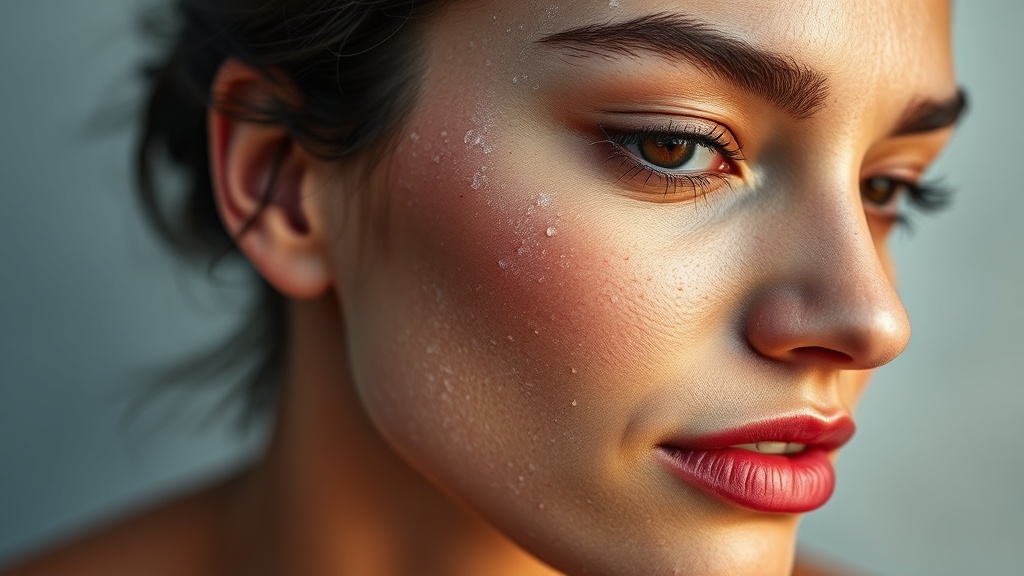
Stop Fighting Your Skin Texture and Start Working With It
Why does my skin look textured under foundation?
You’ve spent twenty minutes blending that perfect shade of beige, only to look in the mirror and realize your foundation is clinging to every single dry patch, fine line, and pore. It’s frustrating. You feel like you’ve done something wrong—maybe you used the wrong brush or bought a bad product—but the truth is usually much simpler. Your skin isn't broken; it just has a surface. Most mainstream beauty advice treats skin like a flat, matte canvas, which is a total lie. Real skin has movement, bumps, and varying textures. Instead of trying to bury them under heavy layers of pigment, we need to change how we prep and apply our products.
When you see a high-definition filter-free photo, you’re seeing someone who has embraced their natural topography. The mistake most people make is trying to use more coverage to hide the texture. This backfires. Heavy-duty foundations often settle into lines, making them look deeper than they actually are. If you’ve ever felt like your makeup looks 'cakey' by lunchtime, you’re likely fighting against your skin’s natural rhythm rather than working with it.
To get a smoother finish, we have to look at the relationship between hydration and pigment. A dry surface acts like a sponge, sucking the moisture out of your foundation and leaving the dry pigment behind. This is why your skin looks flaky by 2 PM. If you want a finish that looks like skin—not a mask—you need to focus on the layers underneath the color.
How do I prep skin for a smoother makeup application?
The secret isn't a more expensive foundation; it’s the prep work. If your skin is dehydrated, no amount of high-end concealer will fix the way it looks. Start by identifying if your texture is caused by dryness (flakiness) or oiliness (enlarged pores). If you're dealing with dry patches, a water-based serum or a lightweight facial oil is your best friend. You want to saturate the skin with moisture so the foundation sits on top of a plump surface rather than sinking into a thirsty one.
A great way to check your hydration levels is to look at the American Academy of Dermatology guidelines on skin health, which often emphasize that moisture barrier integrity is the foundation of any good routine. A healthy barrier means your skin is smooth and resilient. Try using a humectant like hyaluronic acid on damp skin before your moisturizer. This creates a 'plumping' effect that fills in fine lines temporarily, giving your makeup a much smoother base to sit on.
The Texture-Friendly Prep Routine:
- Step 1: Cleanse with a non-stripping, creamy cleanser.
- Step 2: Apply a hydrating serum while skin is still slightly damp.
- Step 3: Use a lightweight moisturizer to lock in that hydration.
- Step 4: Wait at least three minutes before touching your foundation. This 'setting' time is where most people fail.
If you skip the waiting time, the two products will mix and create a slurry that slides right off your face. Patience is the one thing that doesn't cost anything but makes a massive difference in how your makeup wears.
What are the best makeup formulas for textured skin?
If you have visible pores or acne scarring, you might be tempted to reach for the highest coverage matte foundation you can find. Resist that urge. Matte formulas are notoriously unforgiving on texture because they sit on the surface and draw attention to every bump. Instead, look for 'skin-mimicking' textures. This means cream-based products, serum foundations, or tinted moisturizers that have a slight sheen or a natural finish.
A radiant or satin finish is actually more forgiving than a matte one. Why? Because light reflects off a dewy surface in a way that blurs the appearance of depth. A matte finish absorbs light, which can actually highlight the shadows created by pores or scars. Think of it like a flashlight: a direct beam of light creates harsh shadows, while a soft, diffused light makes things look smoother.
When choosing products, pay attention to the ingredients. Look for glycerin or squalane in your complexion products. These ingredients keep the product 'flexible' on your skin. If a product is too stiff, it will crack as you move your face throughout the day. If you want to see how different textures behave, the Vogue beauty sections often feature high-quality reviews of new formula launches that can give you an idea of how products behave in real-world wear.
Avoid these mistakes:
- Over-powdering: Too much powder is a recipe for a textured disaster. If you must set your makeup, use a finely milled translucent powder and a small, tapered brush rather than a large fluffy one.
- Using heavy brushes: A dense brush can micro-exfoliate your skin as you apply foundation, kicking up dry flakes. Use a damp beauty sponge to press the product into the skin instead of rubbing it.
- Ignoring the neck: If you’re using a heavy layer of product on your face, make sure you blend it down. A sudden stop at the jawline looks unnatural and emphasizes any texture differences.
Ultimately, the goal isn't to pretend you have a poreless face. The goal is to look like the best, most hydrated version of yourself. When you stop treating texture as a flaw to be hidden and start treating it as a surface to be hydrated, your makeup will finally start behaving the way you want it to.