Spring Cleaning Your Closet: Eco‑Friendly Strategies to Refresh Your Style

Spring Cleaning Your Closet: Eco‑Friendly Strategies to Refresh Your Style
Hook
Ever stare at a jam‑packed closet and wonder why you’ve got three identical black tees you never wear? 🎯 Spring is the perfect excuse to raid that fashion graveyard, but what if you could do it without adding to landfill waste?
Context
I’m Zara, the self‑taught makeup rebel who refuses to let the beauty industry dictate the rules. The same rule‑breaking mindset applies to our wardrobes. By tossing out the tired “more is better” mantra and swapping it for purposeful curation, you’ll free up space, save cash, and boost your eco‑cred—all while looking fresh enough to turn heads on the Brooklyn streets.
What’s the Real Cost of a Closet Full of “Stuff”?
Before we dive into the how‑to, let’s get the numbers straight. According to the Ellen MacArthur Foundation’s 2024 report on fashion waste, 92 million tons of textile waste ended up in landfills last year—roughly the weight of 2 million elephants. In the U.S. alone, 15 % of all landfill waste is clothing. Those stats aren’t just grim; they’re a call to action.
“Fashion’s biggest problem isn’t production; it’s the endless cycle of buying, discarding, and forgetting.” — Ellen MacArthur Foundation, 2024
How Do I Start a Closet Declutter Without the Overwhelm?
1. What’s the “One‑Item‑Out, One‑Item‑In” Rule and Why It Saves You Money?
The simplest guardrail is the one‑in, one‑out rule: for every new piece you bring home, you must permanently remove one existing item. This forces you to ask, “Do I really need this?” and instantly curbs impulse buys.
Pro tip: Keep a small, stylish basket labeled “Maybe”. Anything you’re unsure about goes in there for 30 days; if you haven’t missed it by then, it’s safe to let go.
2. How Can I Sort My Clothes the Eco‑Smart Way?
| Category | What to Do | Eco‑Benefit |
|---|---|---|
| Keep | Items you love, wear > 5× a year, and fit your current style. | Reduces future purchases. |
| Donate | Gently used pieces in good condition. Look for local thrift shops or [Goodwill’s textile‑recycling bins]. | Extends garment life. |
| Recycle | Fabrics that are torn, stained, or out‑of‑style. Find [textile‑recycling drop‑offs] (e.g., [H&M’s garment collection]). | Keeps fibers out of landfills. |
| Up‑cycle | Items with potential for DIY makeover. Think patchwork jackets, fabric‑painted tees, or belt‑turned‑bag. | Gives old pieces a fresh purpose. |
3. Where Should I Donate, and How Do I Make It Worthwhile?
- Local charities: Look for organizations that sell donated items (e.g., Dress for Success). The resale profits fund community programs, so you get a double win.
- Online platforms: [Depop], [Poshmark], and [ThredUP] let you sell high‑quality pieces, turning clutter into cash.
- Textile recycling: If a garment is beyond repair, drop it at a H&M or Patagonia store. They turn fibers into insulation or new fabrics.
Signature tip: When you donate, include a handwritten note about the item’s story. It adds a personal touch that makes the recipient feel valued—and it’s a tiny act of rebellion against the “anonymous mass‑donation” vibe.
4. Can I Up‑Cycle Without Being a Sewing Guru?
You don’t need a sewing machine to give old clothes a fresh spin. Here are three beginner‑friendly hacks:
| Hack | Materials | Time |
|---|---|---|
| Fabric paint splash | Spray paint, stencil, old tee | 15 min |
| Tie‑dye swirl | Natural dyes (e.g., beet, turmeric), rubber bands | 30 min |
| Patch collage | Vintage patches, fabric glue | 20 min |
Pro tip: Use eco‑friendly paints like [EcoCraft’s non‑toxic line] (they’re low‑VOC and safe for skin).
How Do I Keep My New Closet Sustainable Year‑Round?
5. What’s the “Capsule Wardrobe” Mindset and How Does It Fit My Style?
A capsule wardrobe isn’t a boring monochrome minimalist; it’s a curated set of versatile, interchangeable pieces that reflect your bold aesthetic. Aim for 30–40 items (including shoes and accessories) that you love and that mix‑and‑match effortlessly.
Step‑by‑step:
- Identify your signature colors (e.g., neon pink, electric teal).
- Choose key silhouettes (oversized blazers, high‑waist jeans, slip dresses).
- Build mix‑and‑match combos—you’ll see how many looks you can create from a handful of pieces.
6. How Can I Shop Smarter and Still Stay On‑Trend?
- Buy second‑hand: Platforms like [Depop] and [Grailed] host curated, high‑quality pieces.
- Support indie, BIPOC‑owned brands: They often use low‑impact fabrics and transparent supply chains (think [Terra Moons Cosmetics] for bold color stories—yes, they do makeup, but their ethos aligns).
- Rent for special occasions: Services like [Rent the Runway] let you rock runway looks without permanent ownership.
Takeaway: Your Closet Can Be a Statement of Sustainability
You’ve now got a roadmap to turn a chaotic closet into a conscious style hub. Remember:
- One‑in, one‑out keeps the influx in check.
- Sort, donate, recycle, up‑cycle—each step trims waste.
- Capsule mindset ensures every piece works for you, not the other way around.
- Shop smart: second‑hand, indie, and rental options keep your look fresh without the landfill burden.
Your next move? Set a timer for 30 minutes tonight, pull everything out, and start sorting. The sooner you start, the sooner you’ll feel the weight lift—both literally and ethically. 🌱
Related Reading
- The 7‑Day No‑Buy Makeup Reset: Shop Your Stash Without Looking Boring — A similar declutter challenge, but for beauty products.
- Eco‑Friendly St. Patrick’s Day Party: Sustainable Tips & Tricks — More ideas on turning celebrations green.
- Earth Day 2026: 5 Sustainable Beauty Swaps That Actually Work — Extend your eco‑mindset beyond the closet.
Image Plan
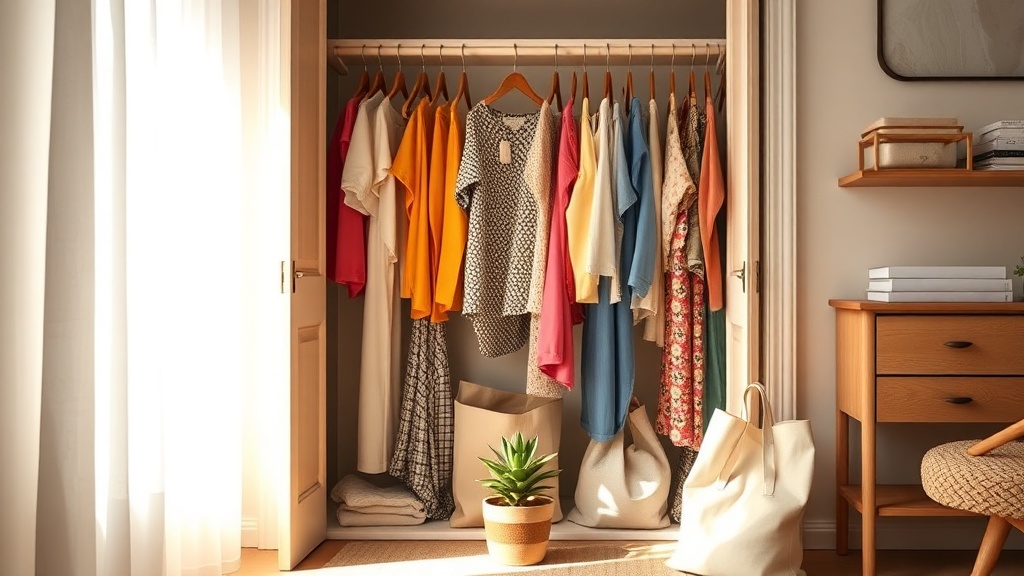
- Featured image: Vibrant spring morning light spilling onto an open closet filled with colorful, eco‑friendly clothing, reusable tote bags, and a small potted succulent on the floor, warm inviting atmosphere.
URL: https://images.realcontent.blog/beautyuntamed/posts/spring-cleaning-your-closet-ecofriendly-strategies-to-refresh-your-style.jpg - In‑post images (one per major section) will be added later with appropriate alt text.