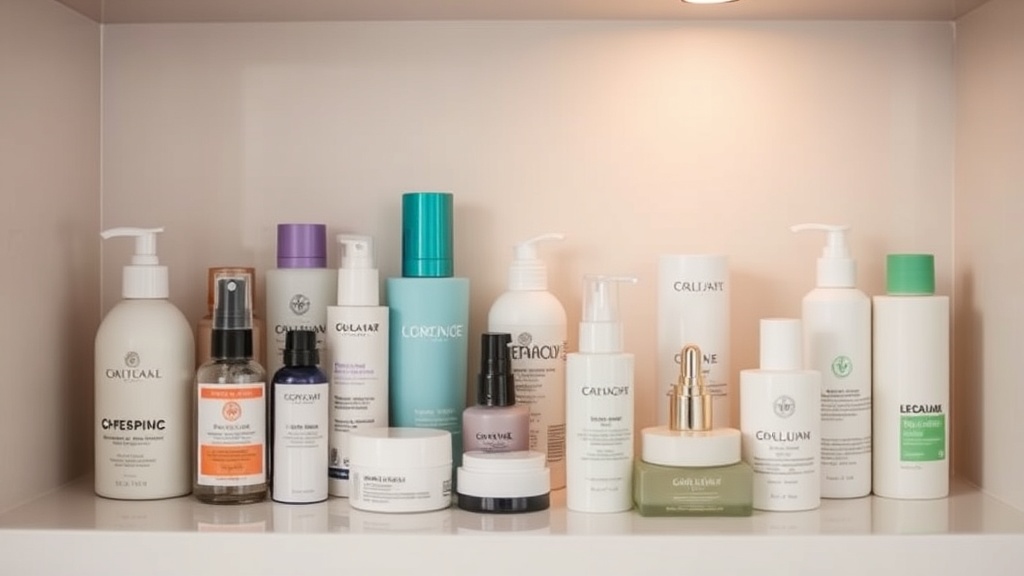
How to Organize Your Skincare Shelf by Actives

Most people believe that a beautiful skincare shelf is defined by matching bottle colors or aesthetic labels, but a visually pleasing vanity is useless if it leads to skin irritation or wasted product. Organizing your skincare by how the products look is a common mistake that leads to ingredient clashing and damaged skin barriers. To truly optimize your routine, you must organize your shelf by active ingredients. This method ensures you understand which products work together, which ones fight against each other, and how to layer them for maximum efficacy without causing chemical burns or irritation.
The Logic of Organizing by Actives
Organizing by actives rather than brand or texture changes your relationship with your routine. Instead of reaching for a "serum" because it's in a pretty glass dropper, you reach for a "Vitamin C" because your skin needs brightening. This system prevents the accidental pairing of incompatible ingredients—like using a high-percentage AHA exfoliant immediately followed by a Retinoid—which can strip your moisture barrier. By grouping your products by their primary function, you can visually audit your collection to see if you are over-indexing on one specific type of treatment while neglecting others, such as hydration or barrier repair.
Phase 1: The Hydration and Base Layer
The first section of your organized shelf should house your "neutral" products. These are the foundational steps that do not contain high-intensity active ingredients and are safe to use alongside almost anything. This group serves as the buffer for your skin.
Humectants and Hydrators
This category includes products designed to pull moisture into the skin. Grouping these together allows you to quickly identify your layering steps. Look for products containing Hyaluronic Acid, Glycerin, or Panthenol. For example, a bottle of The Ordinary Hyaluronic Acid 2% + B5 or Vichy Minéral 89 should live in this section. These are your "safe" products that prep the skin for more potent treatments.
Emollients and Occlusives
These are your moisturizers and oils that seal in hydration. While humectants add water, these products prevent water loss. Keep your lightweight lotions, heavy creams, and facial oils together. If you use a product like CeraVe Moisturizing Cream or a facial oil such as Biossance Squalane, they belong in this foundational group. Keeping these separate from your treatment serums ensures you don't accidentally apply a heavy oil before a water-based serum, which would prevent the serum from penetrating the skin.
Phase 2: The Treatment Section (The High-Intensity Actives)
This is the most critical part of your organization. This section should be subdivided into three distinct sub-groups to prevent ingredient conflict: Antioxidants, Acids, and Retinoids. If you find yourself mixing these up, you risk compromising your skin barrier.
Antioxidant Serums (The Morning Group)
Antioxidants protect your skin from environmental stressors like pollution and UV rays. These are typically best used in your morning routine. Group your Vitamin C (L-Ascorbic Acid), Niacinamide, and Resveratrol products here. A classic example is SkinCeuticals C E Ferulic or La Roche-Posay Pure Vitamin C10. By keeping these in a dedicated "Antioxidant" section, you remind yourself that these are your daytime defense tools.
Chemical Exfoliants (The Resurfacing Group)
This group contains Alpha Hydroxy Acids (AHAs), Beta Hydroxy Acids (BHAs), and Polyhydroxy Acids (PHAs). These products are designed to chemically exfoliate the skin surface. Grouping them together helps you track how often you are exfoliating. If you see a shelf full of Paula’s Choice 2% BHA Liquid Exfoliant and The Ordinary Glycolic Acid 7%, you might realize you are over-exfoliating. This section should be kept separate from your daily hydration to ensure you don't use an acid when your skin is feeling sensitized.
Retinoids and Vitamin A (The Renewal Group)
Retinoids are the gold standard for collagen production and acne treatment, but they are notoriously finicky. This group includes Retinol, Retinaldehyde, and Adapalene. A product like Differin Gel or Obagi Retinol belongs strictly in this category. Because Retinoids are often used at night and can be highly irritating if paired with certain acids, having a dedicated "Retinoid" zone prevents you from accidentally grabbing an acid when you intended to use your Vitamin A.
Phase 3: The Barrier Repair and Soothing Section
When your skin feels tight, red, or stinging, you need to move away from the "Treatment" section and toward the "Recovery" section. This is often the most overlooked part of a skincare shelf.
Ceramides and Fatty Acids
These products are designed to repair the lipid barrier. If you have been using heavy actives and your skin is reacting, you need to pivot to products like Dr. Jart+ Ceramidin Cream or Avène Cicalfate+. Keeping these in a separate "Repair" section provides a visual cue that it is time to stop the "work" and start the "healing."
Soothing Agents
This includes ingredients like Centella Asiatica (Cica), Madecassoside, and Aloe Vera. These are your "fire extinguisher" products. If you use a soothing essence or a calming gel, keep it here. This section acts as a safety net for when your routine gets too aggressive.
Practical Implementation Tips
To make this system work, you cannot just move bottles around randomly. You need a structural method to maintain the order.
- Use Acrylic Dividers: Clear acrylic organizers are the best way to create "zones" on your shelf. Use one divider for Antioxidants, one for Acids, and one for Hydration. This creates a physical boundary that prevents you from grabbing the wrong bottle during a rushed morning routine.
- Label Your Zones: If you have a deep cabinet where you can't see the labels clearly, use a label maker or even a piece of masking tape to mark the sections: "AM/Antioxidants," "PM/Retinoids," and "Recovery."
- Monitor Expiration Dates: Actives like Vitamin C and Retinoids are unstable and degrade over time. When organizing by actives, check the PAO (Period After Opening) symbol—the little open jar icon—on the back of the bottle. If your Vitamin C has turned dark orange or brown, it belongs in the trash, not on your organized shelf.
- Check Your Temperature: While some people believe in specialized storage, most actives are best kept in a cool, dark place. If you find yourself tempted to use a specialized device, remember that your skincare fridge might be a waste of counter space for most standard serums, as extreme cold can actually destabilize certain formulations.
The "Audit" Routine
Once a month, perform a "Shelf Audit." Take everything off your vanity and group them on a flat surface based on the categories above. This allows you to see the actual chemistry of your routine. Are you holding too many acid-based products? Do you have enough ceramides to support the actives you are using? This audit is the only way to ensure your skincare collection is a functional toolkit rather than just a collection of expensive liquids.
By shifting your focus from how a product looks to what a product does, you take control of your skin's health. A shelf organized by actives is a shelf that works for you, rather than a shelf that just sits there looking pretty. Stop treating your skincare like a decorative collection and start treating it like the biological tool it is.
Steps
- 1
Audit Your Current Collection
- 2
Group by Ingredient Type
- 3
Separate Morning and Evening Essentials
- 4
Use Clear Acrylic Organizers