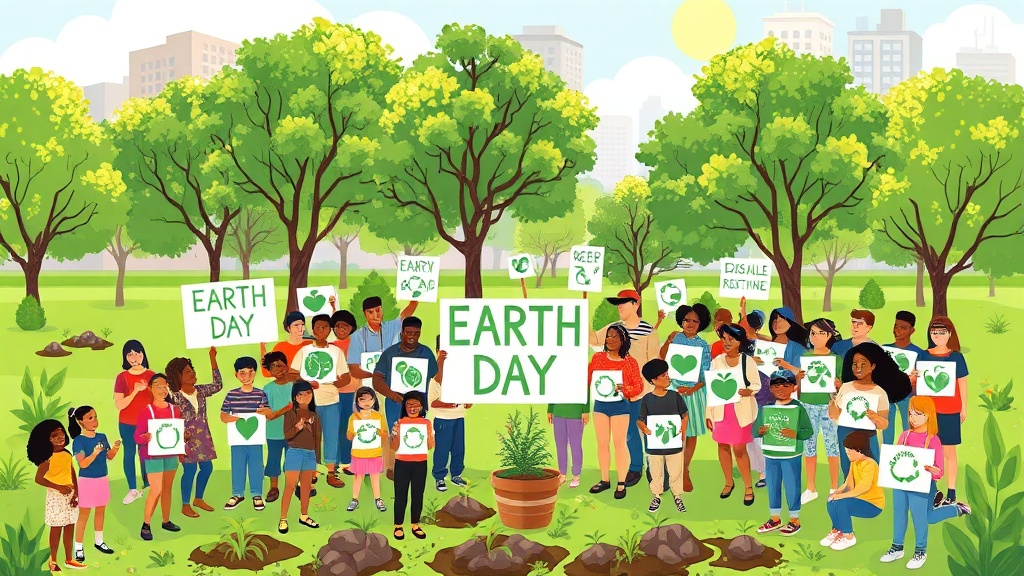
Earth Day Guide: Join Local Events to Shrink Carbon Footprint

What makes Earth Day the perfect moment to take action?
Every year on April 22, the planet gets a global reminder: we can all be part of the solution. The latest UN climate report stresses that grassroots participation is the catalyst for real change. UN Climate Change says community events amplify individual impact, turning small steps into a collective stride toward sustainability.
How can I discover local Earth Day events?
Finding a nearby gathering is easier than you think. Here are three quick ways:
- Check the Earth Day Network calendar. Their online event map lets you filter by city or zip code.
- Search your city’s social feeds. Hashtags like #EarthDay2026 and #LocalEcoAction often surface pop‑up clean‑ups, tree‑plantings, and workshops.
- Ask your favorite indie beauty stores. Many boutique shops host mini‑events—think refill stations, swap parties, and DIY sustainable makeup demos. I’ve seen this at our own Earth Day beauty swap event.
What tools help me stay organized?
Use a simple calendar app or the illustration below that shows a mock‑up of a phone screen packed with local Earth Day activities. It’s a visual reminder to plan your day.
Which eco‑friendly actions can I take at an Earth Day event?
Show up, roll up your sleeves, and make every moment count. Here are five low‑effort, high‑impact habits:
- Bring a reusable water bottle. Refilling stations cut single‑use plastic waste. According to the EPA, a single bottle reused 30 times saves about 1 kg of plastic.
- Participate in a tree‑planting crew. One mature tree can offset roughly 22 kg of CO₂ per year (US Forest Service).
- Swap beauty products. Bring old containers for a refill station or trade with fellow enthusiasts. It reduces packaging waste and introduces you to indie, cruelty‑free brands.
- Join a litter‑pick walk. Collecting just 5 kg of trash prevents it from entering waterways, protecting marine life and reducing micro‑plastic pollution.
- Share your carbon‑saving tips. A quick Instagram story or TikTok post amplifies the message, inspiring friends to act.
How does participating shrink my personal carbon footprint?
Every activity adds up. A study by Nature Climate Change (2024) found that community‑based actions can reduce an individual’s annual emissions by up to 0.5 tonnes—equivalent to driving 1,200 miles less. That’s the power of collective effort.
What can I do after the event to keep the momentum?
Don’t let the excitement fade. Here are three follow‑up steps:
- Commit to a weekly “zero‑waste” habit—like a plastic‑free grocery run.
- Start a local Earth Day club that meets monthly for clean‑ups or sustainable swaps.
- Support indie, eco‑focused beauty brands. Check out our recent roundup of 15 Black‑Owned Indie Beauty Brands—many use recyclable packaging.
Takeaway: Your Earth Day action plan
1️⃣ Find an event via the Earth Day Network or local socials.
2️⃣ Pack reusable essentials (water bottle, tote, refillable containers).
3️⃣ Dive into tree‑planting, clean‑ups, or product swaps.
4️⃣ Share your experience online to inspire others.
5️⃣ Keep the habit alive with weekly eco‑goals.
Bold moves start small. This Earth Day, join your community, shrink your carbon footprint, and prove that sustainability can be as vibrant and unapologetic as a fresh lipstick shade.