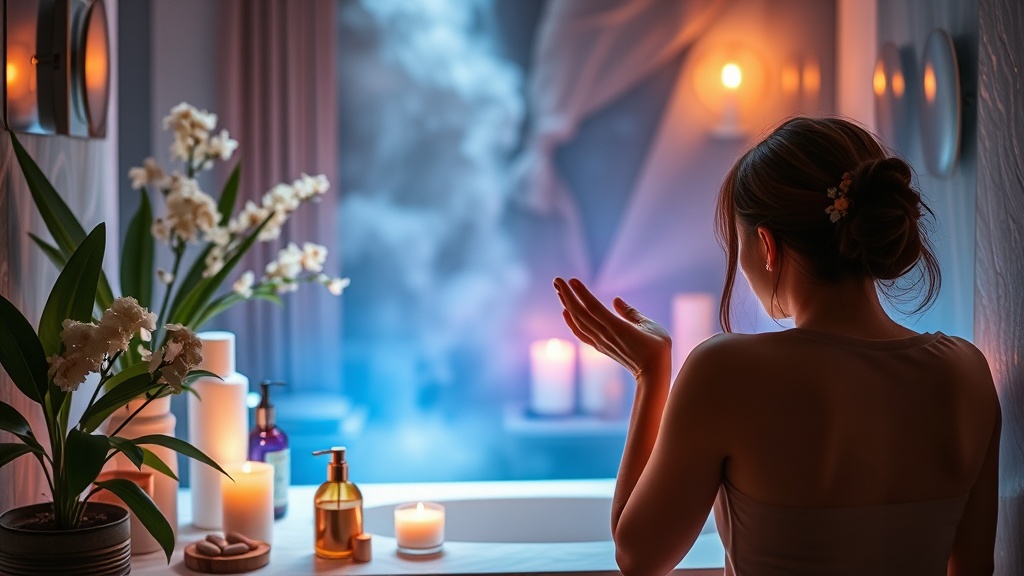
Building a Sensory-Driven Skincare Ritual

The cool, heavy weight of a glass dropper bottle against your palm. The sharp, citrusy scent of a fresh peel. The way a thick, buttery cream disappears into your skin without leaving a tacky residue. These aren't just side effects of a routine; they are the points of contact between you and your well-being. This guide explores how to move away from mindless application and toward a ritual built on sensory feedback—focusing on texture, scent, and tactile sensation to make skincare a moment of genuine presence.
Why Does Sensory Skincare Matter?
Sensory skincare matters because it shifts the focus from purely biological results to the psychological experience of self-care. Most people treat skincare as a chore—a list of steps to check off before bed or before leaving the house. But when you pay attention to the weight of a serum or the cooling sensation of a gel, you're engaging your nervous system. It’s about more than just fixing a skin barrier; it’s about the mental reset that happens when you stop rushing.
Think about your current routine. Are you just slapping on a moisturizer because you know you're supposed to? Or are you actually feeling the way the product interacts with your skin? If you're someone who loves tactile feedback, you might find that a heavy, occlusive balm feels much more "complete" than a watery essence. This is where textural elements can change your entire morning energy.
We often get caught up in the "what" (the ingredients) and forget the "how" (the sensation). A routine shouldn't feel like a clinical procedure. It should feel like a ritual. Even if you only have three minutes, those three minutes can be high-quality if you're actually present for them.
How Do You Build a Sensory-Driven Routine?
Building a sensory-driven routine involves layering different textures and scents to create a cohesive, enjoyable experience. You don't need a hundred products; you need products that feel intentional.
Start by identifying your "anchor" sensation. Do you crave the cooling, refreshing feeling of a water-based gel? Or do you prefer the rich, comforting warmth of an oil-based treatment? Once you know your preference, you can build around it. For example, if you love a cooling sensation, look for products containing Aloe Vera or cucumber extracts. If you love a warming sensation, look for facial oils with a slightly thicker viscosity.
Here is a breakdown of how different textures serve different sensory needs:
| Texture Type | Primary Sensation | Best For... |
|---|---|---|
| Watery Essence | Light, refreshing, instant absorption | Waking up the skin in the morning |
| Gel-Cream | Cooling, bouncy, weightless | Stressful days or hot weather |
| Heavy Cream | Warm, protective, deeply comforting | Nighttime rituals and winter months |
| Facial Oil | Silky, lubricating, luxurious | Deeply nourishing and meditative |
The Role of Scent and Aromatherapy
Scent is the fastest way to change your mood. While many people are moving toward fragrance-free products to avoid irritation, you can still use scent-driven skincare if you choose your sources carefully. Instead of synthetic "perfumery," look for botanical extracts that provide a subtle, natural aroma. A scent of sandalwood or cedarwood can ground you, while something like neroli or citrus can provide a much-needed hit of energy.
Be careful, though. If your skin is currently compromised or highly sensitive, scent—even natural scent—can be an irritant. If you're dealing with a flare-up, go back to basics with a scentless, high-quality brand like La Roche-Posay or CeraVe. A ritual shouldn't cause a reaction; it should soothe it.
What Are the Best Textures for Different Skin Types?
The best textures for your skin are those that satisfy your specific moisture needs without feeling overwhelming. A texture that feels "too much" can actually cause you to avoid your routine altogether.
If you have oily skin, a heavy, greasy cream might feel suffocating. You'll likely prefer the "snap" of a gel or a lightweight essence. On the flip side, if you have extremely dry skin, a lightweight gel might feel like it does absolutely nothing. You need that "hug" of a thick, emollient cream to feel truly satisfied.
- Oily/Combination Skin: Focus on aqueous (water-based) textures. Look for the "water-burst" sensation where the product turns into a liquid upon contact with skin.
- Dry/Dehydrated Skin: Look for "milky" textures. These provide a smooth, slip-like feeling that helps with application and provides lasting comfort.
- Sensitive Skin: Prioritize "calming" textures—think smooth, non-frictional application. Avoid anything gritty or overly textured that might cause physical irritation.
- Aging/Mature Skin: Embrace the "richness." A heavy, buttery texture can feel very luxurious and provides the tactile feedback of deep nourishment.
It's also worth noting that your skin's needs change with the seasons. You might love a light, bouncy gel in July, but by December, that same gel might feel way too thin. Don't be afraid to swap your textures as the weather shifts. It's not a sign of inconsistency—it's a sign of being in tune with your body.
How Much Should I Spend on a Sensory Routine?
The cost of a sensory-driven routine depends entirely on whether you are paying for high-quality ingredients or high-end branding. You can absolutely build a luxurious, tactile routine without spending a fortune.
The "luxury" of a product isn't always in the price tag. Sometimes, a $15 moisturizer from a brand like The Ordinary or Glossier can have a more interesting texture and a more satisfying application than a $200 cream. The goal is to find the sensory "feel" that works for you. If a product feels cheap or "thin" to you, it doesn't matter how expensive it was—it's not the right fit for your ritual.
When shopping, look for these three things to ensure quality:
- Packaging weight: A heavy glass bottle or a sturdy pump adds a tactile sense of quality to the ritual.
- Ingredient transparency: Reliable brands will clearly list their concentrations.
- Texture consistency: The product should be consistent from the first pump to the last.
If you're looking to dive deeper into the world of high-performance textures, you might want to check out the Korean Glass Skin routine, which relies heavily on the layering of varying-weight essences and serums to achieve that specific, luminous finish.
Ultimately, your skincare routine is one of the few times in the day where you are solely focused on yourself. Whether you're using a high-end oil or a simple drugstore moisturizer, the way you touch your skin and the way the product feels is what transforms a mundane task into a moment of true beauty. Play with the textures. Experiment with the scents. Make it yours.